
Category: Core
-
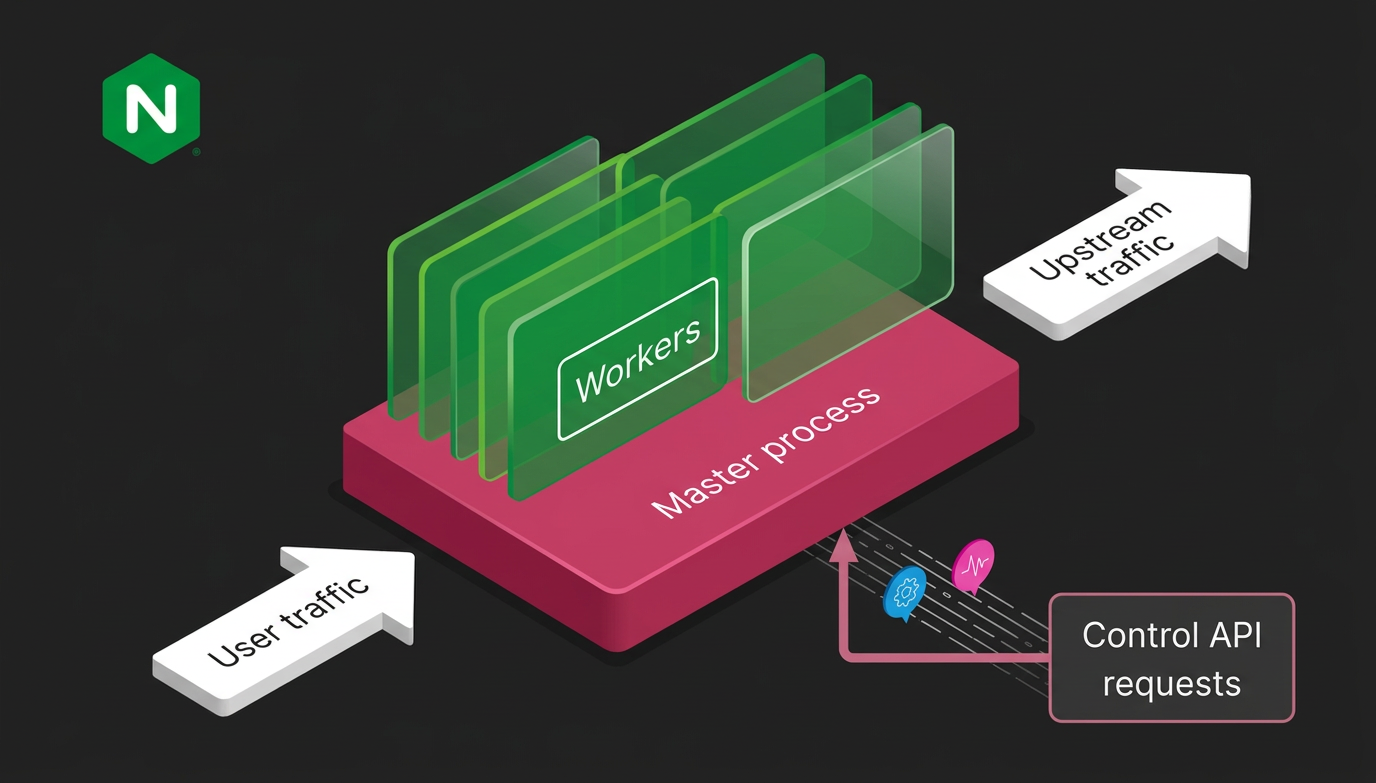
NGINX Control API: View In-Memory Configuration and Reload via HTTP Requests
Before the latest release, NGINX had to be controlled exclusively by Unix signals. The most notable one is SIGHUP or the well-known “nginx -s reload” command. This configuration method, while very stable, does not meet modern environment requirements: there are very few available options, no direct feedback messages on errors, and no real extensibility. We…
-

NGINX Routing on HTTP Request Body
Note: Written by a human. In blog diagram graphic made by AI. NGINX processes HTTP requests in phases. Each phase is designed for specific actions and decisions on the qualities of the request. However, reading of various parts of the request is spread out through multiple phases. A HTTP request consists of several distinct parts.…
-

Predicate Routing for Native Handling of API Traffic
Note: No AI was hurt while writing this blog post. Human tears only. In September 2026 we introduced NGINX 1.31.5 with several core features for one same goal. We expanded the core routing methods and the most critical nginx directives to enable native, non-scripted routing of any API traffic. In this blog post we will…
-

NGINX 1.31.5: Control API, predicate locations, early body inspection, and more
For over two decades, NGINX has been the workhorse of the modern web. Its classic request-processing architecture—reading HTTP headers, matching a URI location path, and streaming payload data to backend services—built the foundation of modern web traffic management. However, the way web applications and AI agent systems communicate is fundamentally evolving. Modern application stacks rely…